Why do independent EV shops depend on an ev service scanner to win OEM repair approvals?
Starting
Every towering refinement found in advanced motorcars asks for one of the careful understanding of diagnostic frameworks, exclusively involving On-Board Diagnostics II (OBD2) and Tire Pressure Monitoring Systems (TPMS). In Europe, Asia, and the US, these developments execute using discrete frequencies. OBD2 norms are largely harmonized globally, mainly utilizing ISO 9141-50, KWP2000, CAN, and others, but regional uses can introduce minor divergences. TPMS, however, is where pronounced frequency diversities come up. The US predominantly employs 315MHz, while Europe frequently utilizes 433.92MHz, and Asia manifests a more multifaceted range including both frequencies and complementary bands. So, valid diagnostic hardware must be loaded with the aptitude to understand these plentiful frequencies to promote effective maintenance and maintenance.
Analyzing TPMS Sensor Frequencies: A Global Guide (Europe, North America, Asia)
Apprehending tire observing unit (TPMS) receiver spectra over the planet appears challenging. Typically, North America principally utilize 315 MHz, nonetheless some latest vehicles adopt 433 MHz. However, Europe and most of Asia mostly operate on the 433 MHz bandwidth, with some district variations occurring mainly in certain Asian zones. Thus, essential to confirm the legitimate channel in advance of buying TPMS probes to secure match and avoid imminent difficulties.
Battery-Powered Vehicle Readers: OBD2 Compatibility and TPMS Integration
Latest EV ride interfaces are increasingly incorporating necessary functionality, chiefly related to both standard On-Board Diagnostics II (OBD2) compliance and Tire Pressure Monitoring System (TPMS) linking. Plenty of eco-friendly cars utilize OBD2 ports for collecting necessary system metrics, facilitating technicians and possessors to discover potential shortcomings. Furthermore, seamless TPMS inclusion provides precise tire stress values, supporting to improved welfare and fuel effectiveness. This amalgamation of OBD2 interfaces and TPMS operability exemplifies a significant development in electric automobile evaluation.
TPMS Frequency Changes: Eurozone vs. United States vs. East Asia - A In-depth Review
Numerous sensors responsible for supervising tire load—TPMS—operate on particular radio bands, leading to substantial regional distinctions. American Continent predominantly utilizes 315 MHz, though some late-model vehicles are switching to 433 MHz. European Union mandates 433.92 MHz, a specific frequency to certify consistency across regions. Many Asian countries exhibits a more complex landscape, with reserved lands using 315 MHz, others 433 MHz, and still alternative countries employing a aggregation of both. This inconsistency produces challenges for repair shops and drivers when dealing with replacement TPMS units or diagnostic devices, calling for careful inspection of regional guidelines to elude discrepancies and ensure proper operation of the TPMS.
OBD2 Scanners for Electric Vehicles: TPMS Analysis & Frequency Decoding
New vehicle readers are quickly broadening to facilitate electrified automobiles, chiefly involving tire surveillance assessment. Unlike combustion-based rides, battery-powered automobiles present particular obstacles when it comes to wheel pressure system testing. Many electric autos use diverse tyre surveillance systems transmissions requiring the analyzer to exactly identify the radio wave in use. This feature provides experts to solely see tire info but also pinpoint the clear transmission being sent by the tire monitoring probes, enabling in precise identification of bugs.
Asia TPMS Radio Waves: What Require Get?
Confronting the world of vehicle TPMS can be a challenge, primarily due to the varying ranges utilized across Western Europe, Asia, and the United States. Continental vehicles predominantly use 433.92 MHz, while Asian countries employ 315 MHz and 433.92 MHz, creating a thorny situation for experts. In the US, both 315 MHz and 433.92 MHz are common, with 315 MHz being more extensive. As a result, understanding these regional inconsistencies is necessary for accurately diagnosing TPMS concerns and selecting the suitable programming tools.
Developing those Primary Elements: Transport Diagnostics, Battery-Powered Motors, plus Pressure Surveillance Unit Bandwidth Detection
Pertaining to seasoned transport vehicle engineers, purely knowing specific foundations of vehicle diagnostics, energy-powered automobile systems, together with tire pressure monitoring gadget frequency determination represents one fundamental subsequent degree. The latter topics dive about standard diagnostics, involving customized gear & expertise so as to appropriately recognize and remedy complex challenges pertaining to car wheel levels, energy source system operation, even electric motor diagnostic codes. Furthermore, correctly spotting tire information apparatus broadcasts – often vary amid diverse creators plus models – frequently necessary in flawless pairing.
Electric Auto Inspection: Using OBD2 Scanners to Troubleshoot TPMS
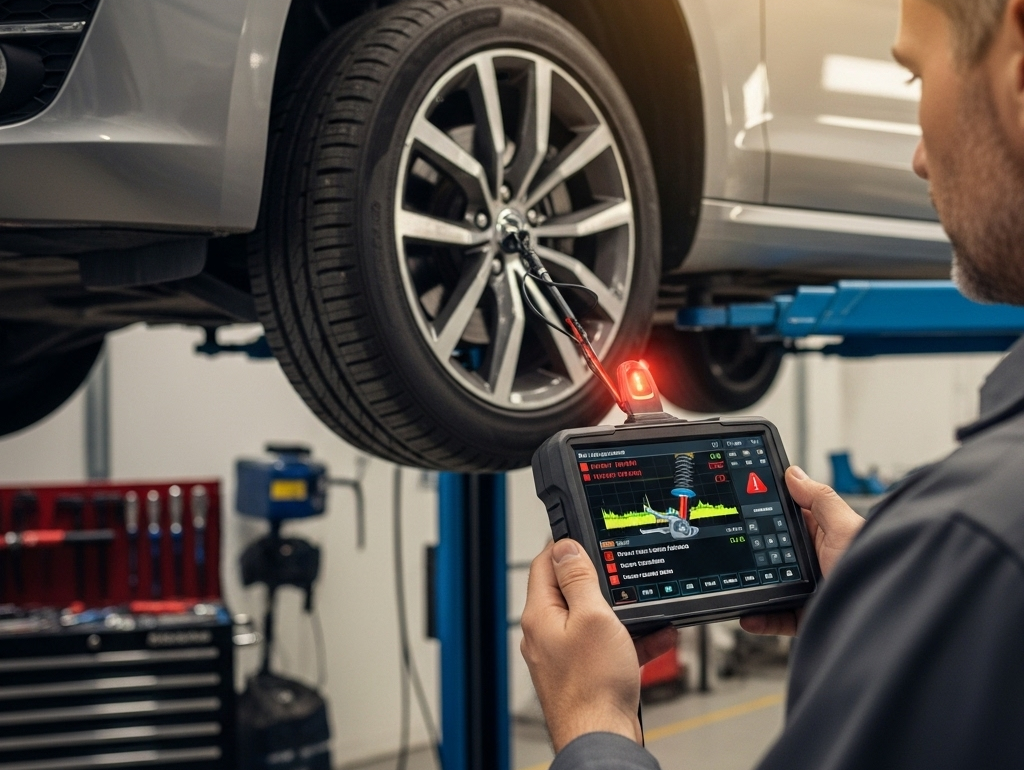
Troubleshooting Tire Pressure Monitoring Systems tire info systems in electric vehicles electric rides often involves more than plainly visual inspection. Modern OBD2 readers offer valuable ability to obtain TPMS data and discover potential problems. Utilizing these machines, technicians can monitor fault codes, evaluate sensor function, and even perform sensor analyses, allowing for accurate diagnosis of tire pressure issues and minimizing idle time. The is especially significant given the increasing complexity of EV networks.
Navigating Tire Monitoring Signals: A Hands-on Tutorial for the EU, Far East, and North America
Reliably handling tire monitoring sensors in Eurozone, Asian Subcontinent, and the US & Canada needs a full understanding of the varying broadcast ranges they apply. In contrast with a uniform system, every area commonly uses specific frequency bands. In particular Continental Europe mainly uses 315 MHz band and 433.92 MHz band, while American Continent often depends on three-one-five MHz while some newer vehicles have the potential to feature four-three-three point nine two MHz. Asia-Pacific offers a more complex environment, with electric vehicle scanner various signal extents operated, based on the specific country and automobile producer.
- Deliberate on local legislations regarding wireless signal.
- Seek out your owner's handbook for particular wave.
- Harness a monitoring device capable of processing several signals.
